

Executive Summary
Growing your managed service provider business may mean doing things you currently avoid: asking for an introduction, starting a sales conversation, trusting someone else to lead a meeting or reviewing how you deliver support. When you keep putting those decisions off, your business can remain dependent on your personal time and relationships.
After cycling 418 miles from Somerset to Scotland in six days, I have been thinking about how we respond when something becomes uncomfortable. In this article, I share what that challenge meant to me, why familiar routines can hold MSP owners back and how to choose a practical next step. You will find examples, a table of actions to try and a simple way to review what happens. The aim is to turn an ambition for your business into something you actually do.

What did cycling from Somerset to Scotland teach me about discomfort
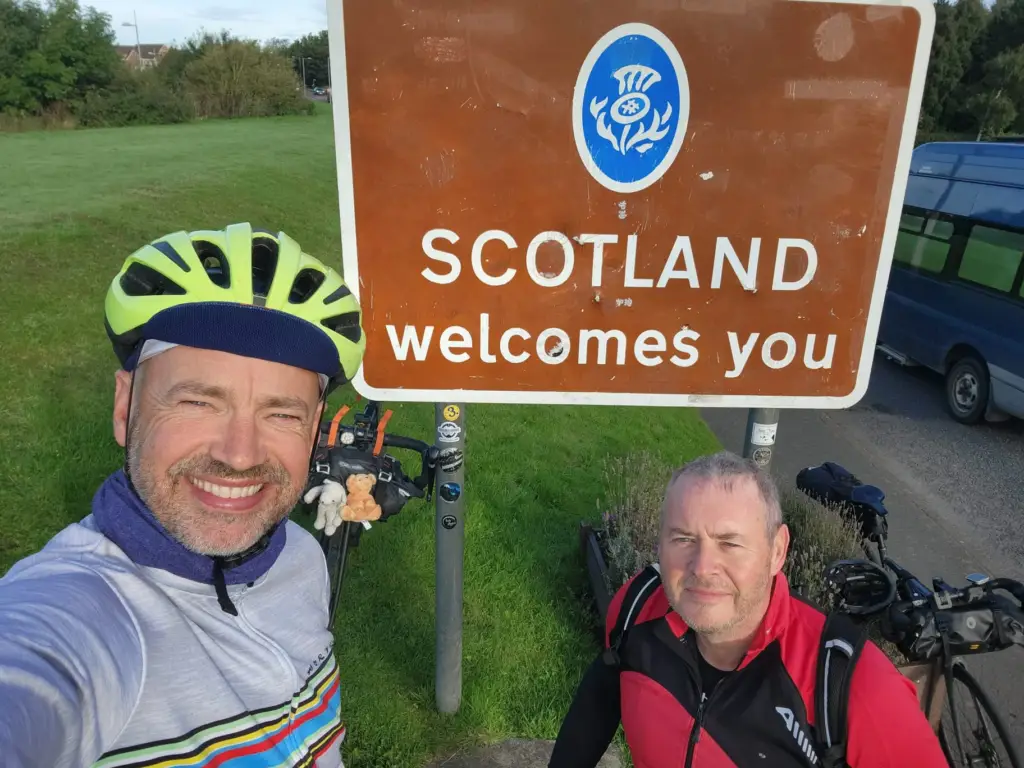
In September 2026, I completed my Somerset-to-Scotland challenge. Six days on a bike. 418 miles. Not a battery in sight!
I cannot lie. Waking up afterwards and knowing I did not have to get back in the saddle felt good.
There were times in the Lake District when I was barely managing 5 mph up the hills. My 51-year-old body was making its feelings known, and I did not particularly want to carry on.
But I kept going. Eventually, I rode into Glasgow and could celebrate completing the challenge.
People ask me why I do these things. Part of the answer is that I want to challenge what I think I can do. I want an experience I can draw on when business becomes difficult and I am tempted to retreat to what feels easier.
There will be pressures and problems in the coming months. That is the nature of running a business. Completing this ride has given me a reminder of what it feels like to work through a difficult stretch and reach the other side.
So what does that have to do with your MSP?
How can staying in your comfort zone limit MSP growth
Your comfort zone is the familiar way of doing things. You know the customers, understand the technical work and feel confident dealing with the problems that land on your desk.
That familiarity may have helped you build a good business. One that employs people, looks after its customers and gives back to the community.
There is plenty to be proud of in that.
But does the business still excite you? Do you feel energised on a Monday morning? Can it operate and grow without you being involved in everything?
If the answers are yes, I am pleased for you. You have achieved something many MSP owners want.
If they are not, take a closer look at the routines you keep repeating.
You might want a more consistent pipeline but keep waiting for someone to recommend you. You might want the team to take responsibility for sales but still lead every meeting yourself. You might want more time to work on growth but keep postponing a decision about support capacity.
Each choice feels understandable in the moment. Over time, those choices can keep the business dependent on you.
What does David Goggins mean by pushing your governor
David Goggins has been an inspiration for my physical challenges. He describes an internal “governor” that encourages us to stop before we have explored what we can do.
His “40% rule” expresses the belief that we can have more capacity left when we feel we have reached our limit. He discusses this thinking in his interview on The School of Greatness.
I use that as a motivational idea about perceived limits, not a literal measurement of anyone’s physical capacity.
For an MSP owner, the useful question is whether discomfort is stopping you from taking a sensible action.
You know a customer values your work, but you feel awkward asking for a testimonial. You met someone who could introduce you to a prospect, but you worry about contacting them. You want someone else to handle a sales meeting, but you are reluctant to let go.
Those situations deserve a closer look. What is the actual risk? What preparation would help? What could you learn by taking one step?
You do not have to cycle to Scotland to explore those questions.
Why do referrals and founder dependence deserve attention
In a recent survey I carried out with several MSP business owners, 80% said their businesses struggled to grow without their involvement. Meanwhile, 90% said they relied on referrals for new business.
Those figures describe the owners who took part in my survey, rather than the MSP sector as a whole. They raise an important question: how much of your growth depends on you and the people you already know?
Referrals can bring excellent customers. Keep earning them and asking for them. But waiting for recommendations leaves you with limited control over when the next opportunity arrives.
I explore this further in Referrals Aren’t a Growth Strategy.
And if every new sale needs your personal involvement, there is a practical limit to how much the business can do while you are busy elsewhere.
Imagine a founder who approves every proposal and attends every discovery meeting. Even with capable people around them, opportunities have to wait for a gap in their diary.
A useful first step could be helping a colleague lead one part of the process, with clear expectations and a review afterwards. That gives the colleague experience and gives the founder evidence about what support they need.
What practical steps can MSP owners take outside their comfort zone
Start with an action connected to a result you want. Making yourself uncomfortable for no useful reason will not improve your business.
Here are five examples to consider.
Familiar habit | A practical step to try | What to review |
|---|---|---|
Waiting for referrals | Contact five suitable prospects with a relevant reason to talk. | Replies, conversations and what you learn about their needs. |
Keeping customer praise private | Ask one happy customer for a short testimonial you can share with permission. | Whether it gives prospects clear evidence of the value you deliver. |
Leaving networking contacts untouched | Ask a relevant contact whether they would be comfortable making an introduction. | Whether the introduction happens and whether there is a useful fit. |
Leading every sales conversation | Prepare a colleague to lead an agreed part of the next discovery meeting. | What they handled well and where coaching is needed. |
Postponing support resourcing decisions | Compare the full costs and service requirements of an internal hire and outsourced support. | Capacity, quality, management time and any realistic margin difference. |
That last example may feel like a bigger step. Outsourcing a first-line support role could create capacity or release margin for marketing, but you need to work through the numbers and service requirements first.
Other MSPs doing it is a reason to investigate. Your own requirements and evidence should determine whether you proceed.
For many owners, the first useful step will be much smaller. A phone call. A request. A meeting that has been sitting on the to-do list for weeks.
How do you turn an uncomfortable action into consistent progress
Choose one action and give it a place in your diary. Then decide what you will review after you have done it.
If your goal is to become less dependent on referrals, “do more sales” is too vague. Decide who you will contact, why the conversation could be useful and when you will make the approach.
For example, you could set aside two 30-minute sessions this week to research and contact a small group of suitable businesses. Record the responses and agree the next action for each relevant conversation.
You may feel awkward during the first session. That does not automatically mean the approach is wrong. Equally, putting in effort does not mean the approach is right.
Look at what happened. Was the message relevant? Did you reach the right person? Was the request clear? Use those answers to improve the next attempt.
Then repeat the activity with what you have learned. My article on why consistency wins new MSP clients explains why an occasional burst of outreach rarely gives you a dependable routine.
The same applies to delegation. Prepare someone, give them responsibility for a defined task and review it together. If you take the task back at the first sign of difficulty, they lose the opportunity to improve and you remain responsible for everything.
Progress needs both action and learning.
What if the uncomfortable conversation is about budget
Money is another subject people put off. You can enjoy a promising conversation with a prospect and still avoid asking what they are prepared to invest.
That uncertainty can follow you all the way through to the proposal.
If this is an area you want to improve, listen to Discussing Budget in Sales Conversations Without Awkwardness, from my Diary of an IT Sales Expert podcast.
The episode covers talking about investment, explaining your pricing and handling prospects’ reactions. Choose one part of that conversation to practise before your next meeting.
Frequently asked questions about stepping outside your comfort zone
How do I know whether my comfort zone is holding my MSP back
Look for an important goal you keep discussing without changing what you do. Then identify the action you are avoiding and your reason for avoiding it. You may uncover a skill gap, a capacity problem or a conversation that feels uncomfortable.
Do I have to take a big risk to grow my MSP
No. Start with a manageable action whose cost and possible downside you understand. Asking for an introduction or giving a colleague part of a meeting can help you learn before making a larger commitment.
Should I stop relying on referrals completely
Keep referrals as a valuable source of business. The aim is to add a repeatable way of creating opportunities, so your plans do not depend entirely on recommendations arriving at the right time.
What if I try something and it does not work
Review the outcome before deciding what it means. You may need to improve the approach, get help or stop an activity that has shown a poor fit. Repeating an action is useful when you are learning from it.
What will you do differently this week
My reward was riding into Glasgow and knowing Somerset to Scotland was complete. I am already thinking about what my next challenge might be.
Yours could be the testimonial request you have avoided. The introduction you have not asked for. The first step towards giving someone else responsibility for winning business.
What could happen if you took that action?
And where will your business be in a year if you keep putting it off?
Choose something that matters, decide when you will do it and follow through.
If you would like help turning your MSP’s growth ambitions into a practical sales plan, get in touch with me. Tell me what you want to change and the action you are ready to take.