


I spend much of my time talking to CEOs and business owners and helping them build plans for growth.
Growth is normally a pretty simple equation.
More customers and/or larger customers + increased prices – lower costs of customer acquisition and delivery = profitable growth
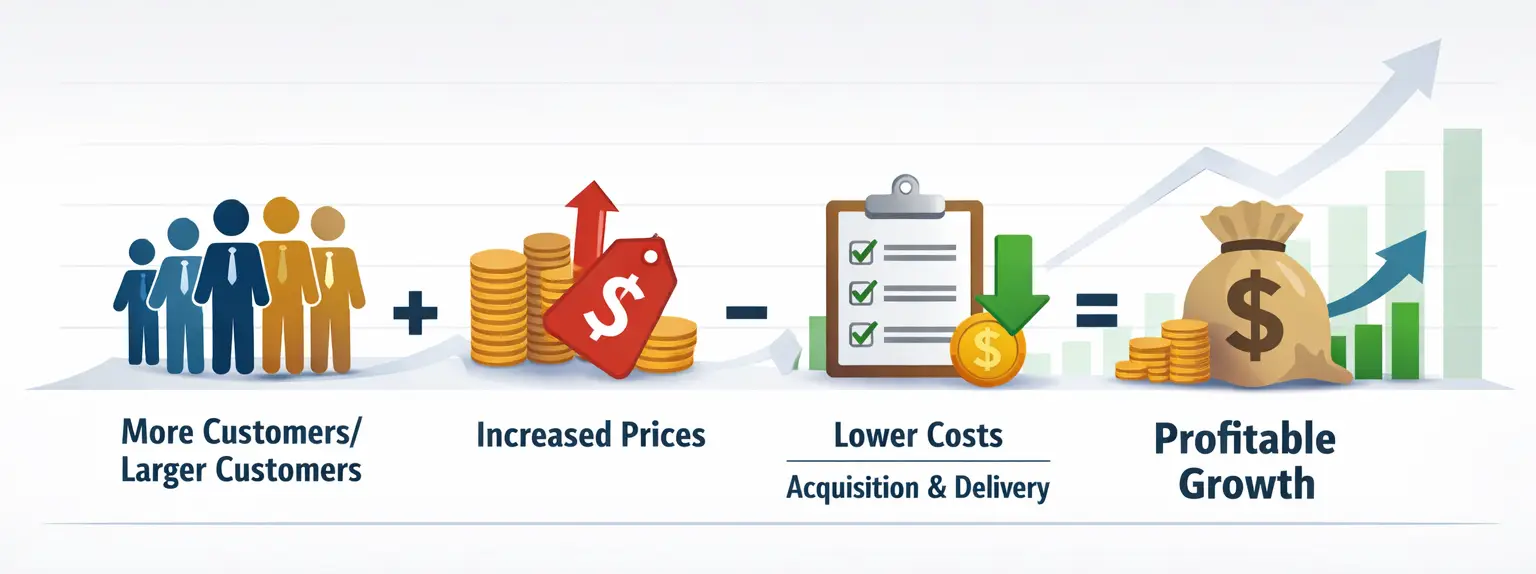
Profitable growth = smiley-faced CEOs and leaders 🙂
Whilst it seems simple enough, achieving that growth is not a simple task, and especially not for time-poor leaders. The business needs more leads to be converted into customers, and quite simply, this needs to happen without them needing to be involved.
Quite simply, they don’t have the time to engage in all of these conversations when they have other aspects of the business to focus on.
They want business to be brought in and for the tills to buzz whilst they focus on partnerships, delivery, raising money—the list goes on. In their heads, winning business is easy. They did it at the start, and it’s why the company has grown.
All of this is true, but one of the biggest mistakes I see business leaders making when they want to grow their business is not creating a sales playbook or blueprint for success.
The leader has a clear idea of how they want to grow and what others should do to bring new clients on board. For them, sales or winning new business is easy. It happens as a result of the knowledge and skills they have developed over time.
Just because they know what to do, however, doesn’t mean that others are automatically going to know what to do and how to approach certain situations. I always remind CEOs and sales leaders that their sales teams aren’t mind readers or psychics.
Without clear guidance and a blueprint to follow, it is highly likely that the team will drift off course and fail.
We have put together several ‘Business Growth Playbooks’ for organisations over the last few years, and there are three critical factors which we would advise you put in place if you want your future growth to be consistent and strong.
Point 1: Identify past areas of success
Work out where you were strong in the past and use this as the starting point to help others achieve success.
Why did the customers you signed up start to work with you?
What was it that you offered that made them commit to you?
Try to identify two to three common characteristics that stood out from those early successes and use these as the basis for others to build on. Don’t just choose anyone. Know where you achieved past success and what problem you solved for this group of people, and make that the starting point of your playbook.
Either document it yourself or bring someone in to document it. My company can help if you don’t have time.
“Scaling a business is not about doing more yourself; it’s about building systems that allow others to succeed without you.”
Author Unknown
Part 2: Understand your sales journey and process
Whilst you would love to think as a leader that you won every bit of business that you went for, we both know that’s not true.
You had success, sure, but you didn’t convert every call into a meeting or every meeting into a confirmed sale. There were times when you would have shared proposals which didn’t get through, and you learned as a leader that this was all part of the sales process and journey. Your team is going to go on the same path as you.
Outline the journey that you went on with new customers. At what points in the journey did you know when prospects weren’t a good fit? What were the steps in the process that you used when you won a deal? Did you do a demo, a site visit, or arrange for another customer to speak with them?
Help your team to understand the ideal buyer journey and process you went through and what rates of conversion you had at each stage. It will not only help them win business, but it will help keep everyone realistic about what can and can’t be achieved.
“Process is what turns individual success into organisational success.”
Michael Gerber
Part 3: Identify how to handle inbound leads and approach outbound prospecting
This is the nuts and bolts of good selling, and it’s vital that there is a playbook for others to follow. This is especially important if you want your company to be represented in the right way. This sets out the behaviours and ways of operating that you want from your team.
How should they engage with new inbound leads?
What should they do, and what should they not do?
What questions should they ask?
What questions did you ask that got you results?
How did you qualify leads to know whether it was right to spend more time with them?
The list goes on—and this is just with inbound leads.
There is a right and wrong way of engaging with those who don’t know your company, and if you let the team just do whatever they want, you will get the business version of the Wild West, which can cause lots of issues.

Build a clear plan of how to go about winning new business and document it within a playbook which is a live, iterative plan that gets updated and used. Make it something that the team relies on and which you can use to measure results.
It is also vital within this part of your playbook that you include how they should react to typical responses. What should they say or do when someone ignores their call or doesn’t turn up for a meeting?
Don’t forget these small but critical elements. They are vital. And always remember—you may know how to handle these situations, but they may not. Give them the tools to know what to do and say, and you stand a far better chance of achieving the business growth plans that you desire.
As ever, if you need support or want to talk through how you can start to scale and grow your business, my team and I are here to help.
Have a brilliant week sales week ahead and remember: Eat or be Eaten.
Until the next time,
James