


Executive Summary
Every summer, MSP salespeople hear the same response:
“Let’s pick this up after the holidays.”
It’s tempting to assume annual leave has killed the opportunity.
In reality, holidays are rarely the reason deals stall.
More often than not, prospects delay because they don’t yet feel enough urgency to act. If the business problem was significant enough, they would find the time before they went away.
In this article you’ll learn:

Every Summer, MSP Sales Pipelines Slow Down
July and August can be frustrating months for managed service providers.
Decision-makers disappear on holiday.
Projects pause.
Meetings get postponed.
Pipelines appear to grind to a halt.
After more than 30 years in B2B sales, I’ve noticed something interesting.
The businesses that continue winning work throughout the summer aren’t necessarily selling better services.
They're simply uncovering urgency better than everyone else.
Because holidays rarely stop people buying.
They simply expose a lack of urgency that was already there.

Why Do Prospects Say "Let's Talk After the Summer"?
This is one of the most common questions I hear from MSP sales teams.
Typically, the conversation has gone well.
An IT Director says they’re reviewing suppliers.
A Managing Director admits they’re unhappy with support.
Someone downloads your cybersecurity guide.
Discovery goes well.
Everyone seems positive.
Then comes the familiar response:
“Let’s revisit this after the holidays.”
Many salespeople immediately blame timing.
I think that’s the wrong conclusion.
Instead, ask yourself:
If ransomware hit their business tomorrow, would they still wait until September?
Probably not.
Urgency nearly always beats inconvenience.

How Can MSP Salespeople Create Urgency Without Being Pushy?
One of the biggest misconceptions in sales is that urgency comes from pressure.
It doesn’t.
Pressure comes from the salesperson.
Urgency comes from the prospect recognising the cost of doing nothing.
Those are two very different things.
Good salespeople don’t invent urgency.
They help prospects discover it for themselves.
Help Prospects Visualise Life After the Decision
Rather than pushing harder, help them picture the benefits of making the decision before they leave.
Questions like these work well:
- How would it feel if this was already underway before you returned?
- Would September be easier if your new IT partner had already started planning the transition?
- What would happen if this remained unresolved until October?
People naturally like clearing their desk before going away.
You’re simply helping them remove one more item from the list.

Why Discounting Is Usually the Wrong Answer
Every summer I see MSPs making the same mistake.
They panic.
Then they discount.
Perhaps it’s:
- Free onboarding
- Reduced project fees
- Lower monthly support costs
- "Summer specials"
Please don’t.
The moment you reduce your price simply because it’s July or August, you’re telling the prospect your pricing wasn’t fixed in the first place.
That’s incredibly difficult to recover from.
Instead…
Increase value.
What Can MSPs Offer Instead of Discounts?
Value-added offers reinforce your expertise without reducing profitability.
For example:
Instead of Discounting | Add Value Instead |
Reduced onboarding fee | Priority onboarding before September |
Lower monthly support | Complimentary Microsoft 365 security assessment |
Discounted project work | Cyber Essentials readiness review |
Reduced consultancy | Staff cybersecurity awareness training |
The investment stays the same.
The perceived value increases.
Everybody wins.
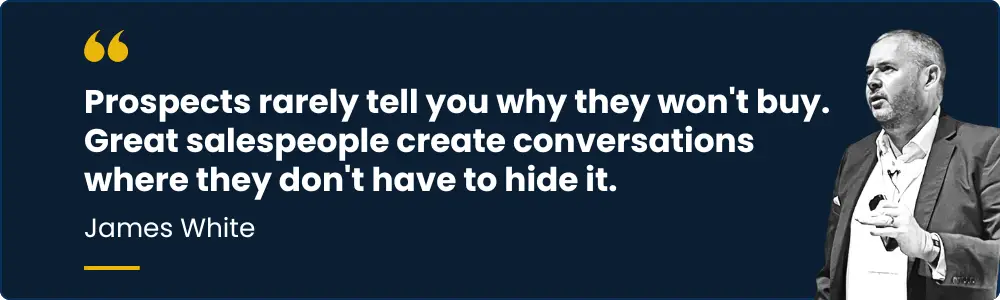
Sometimes the Best Close Is Simply Being Honest
If you’ve built trust throughout the sales process, sometimes honesty is the strongest close available.
You might say:
“I’d genuinely love to help solve this. If we can get everything agreed before you go away, we’ll spend August preparing everything so you’re ready to hit the ground running when everyone returns. How does that sound?”
No pressure.
No manipulation.
Just a genuine desire to help.
Surprisingly often, that’s exactly what prospects need to hear.
My Experience Working with MSP Sales Teams
Across hundreds of sales conversations I’ve reviewed with MSPs, I rarely see deals lost because someone went on holiday.
Instead, opportunities usually stall because discovery didn’t uncover enough business impact.
The prospect liked the salesperson.
They liked the company.
They even liked the proposal.
They simply didn’t believe solving the problem today was significantly better than solving it in six weeks’ time.
That’s a discovery issue.
Not a holiday issue.
One Final Thought
Don’t confuse timing with urgency.
Prospects don’t delay because it’s summer.
They delay because the pain of staying where they are still feels smaller than the effort of making a decision today.
Your role isn’t to create pressure.
Your role is to help them recognise the cost of waiting.
When you do that well, summer becomes far less of an obstacle than most MSP salespeople believe.
Frequently Asked Questions
Why do MSP deals slow down during the summer?
Holiday periods can delay meetings, but they rarely stop important buying decisions. Businesses still make decisions when the need is urgent enough.
Should I discount my MSP services to close deals before the holidays?
Generally, no. Discounting weakens your value proposition. It’s usually more effective to offer additional services or implementation benefits instead.
How do I create urgency without pressuring prospects?
Focus on helping prospects understand the consequences of delaying their decision rather than trying to force them into making one.
What questions help uncover urgency?
Questions that explore business impact work well, such as:
- What happens if nothing changes?
- What’s the cost of waiting until September?
- How would your business benefit if this was already underway?
Why do prospects delay decisions?
Most delays happen because the perceived cost of staying the same is still lower than the perceived effort or risk of changing.